Key takeaways
- Ecosystem ponds rely on plants and gravel to stay balanced.
- Koi ponds are built around fish, with depth and heavy filtration.
- Pondless waterfalls give sound and movement with no open water.
- Swimming ponds pair a swimming zone with a planted cleaning zone.
Ecosystem ponds
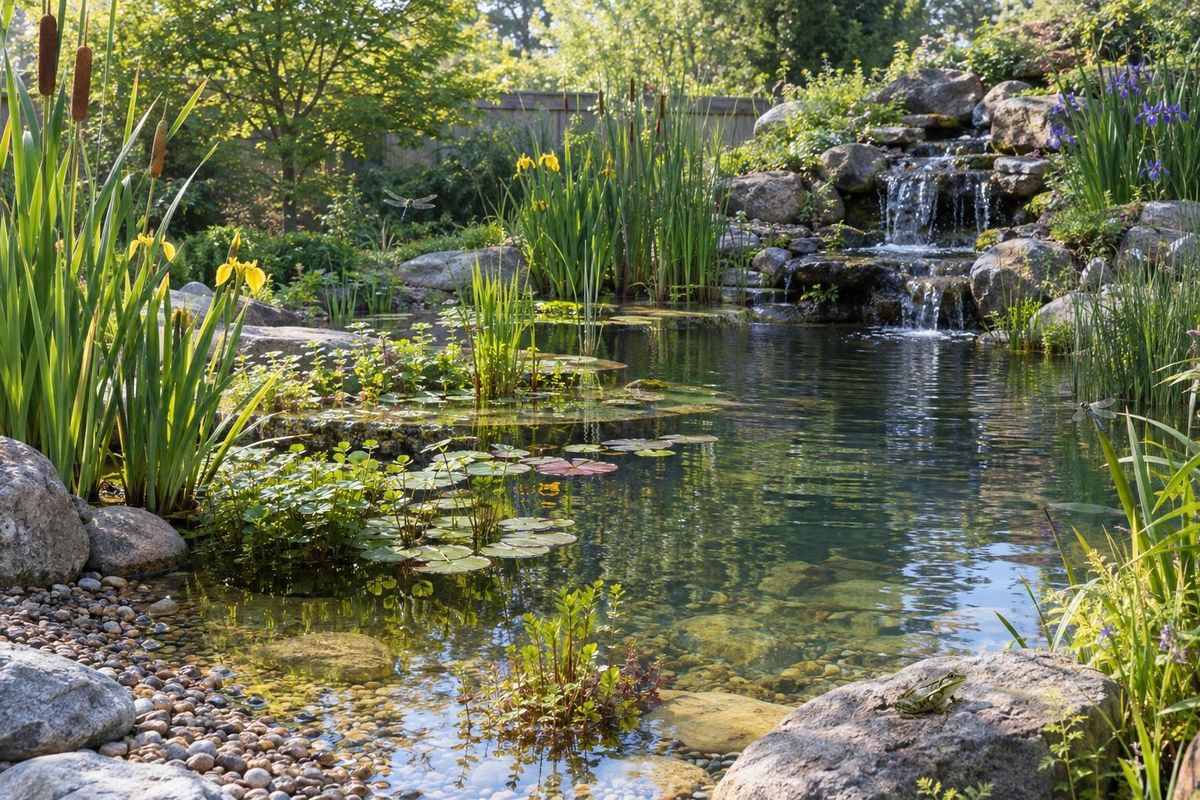
An ecosystem pond leans on nature: layered shelves, gravel and plants that take up nutrients, and moving water that keeps oxygen high. A few fish are fine, but the pond is designed for plants and wildlife more than for a big fish load.
They look natural, welcome frogs and dragonflies and often need less equipment than a koi pond.
Koi ponds
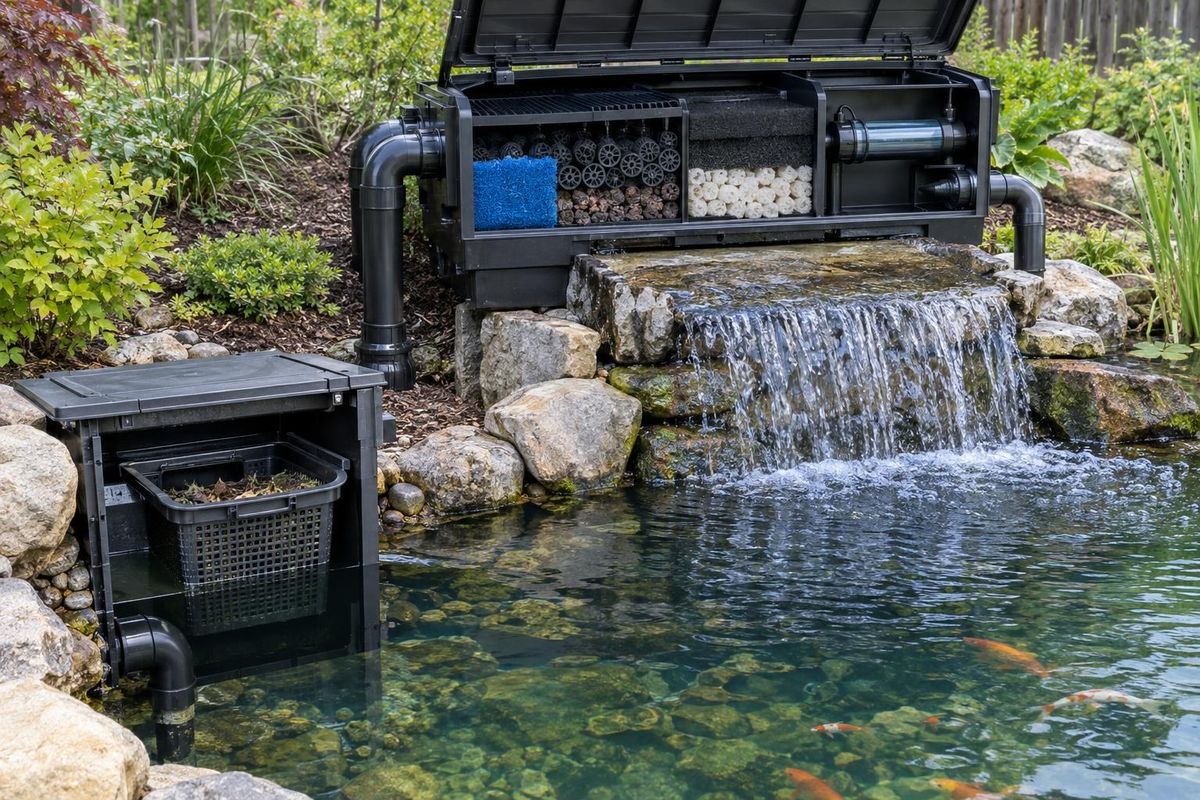
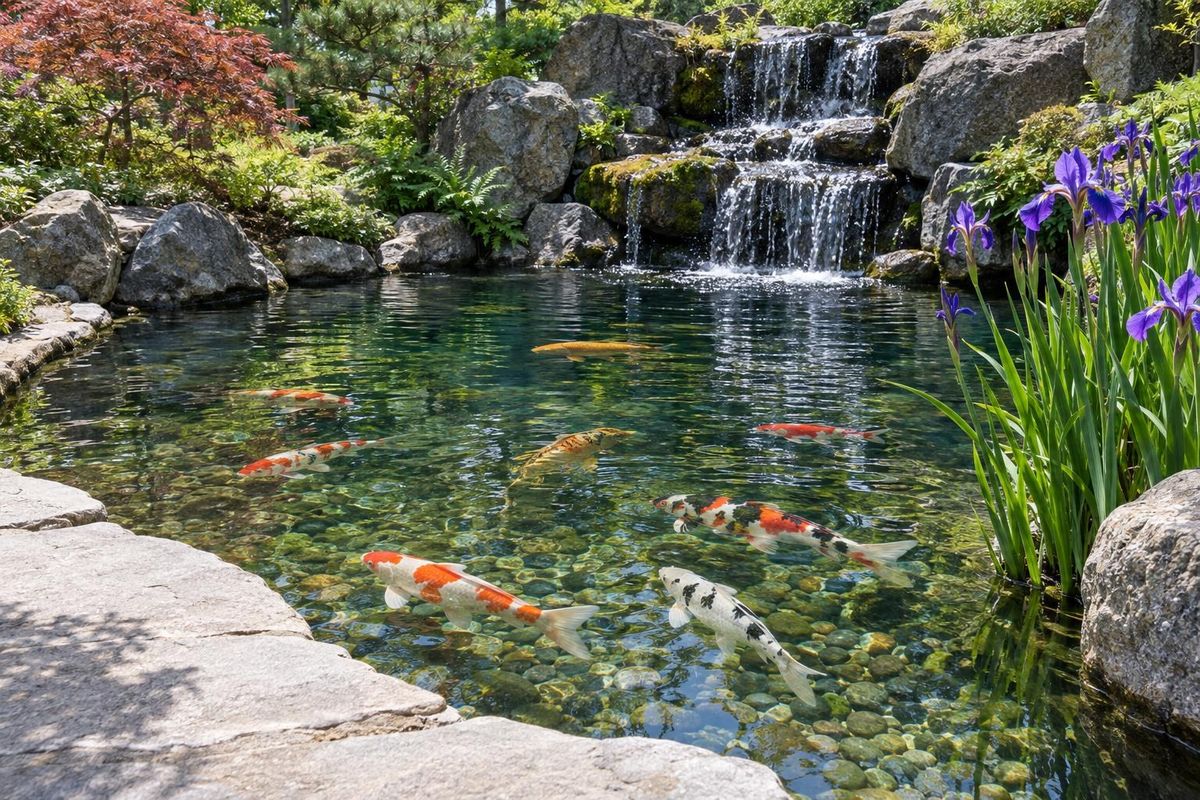
Koi are big, active fish that produce a lot of waste, so a koi pond is built for depth, circulation and strong mechanical and biological filtration. Bottom drains, skimmers and generous filters are common, and protection against herons and raccoons is wise.
The result is crystal-clear water and the pleasure of fish that learn to eat from your hand.
Pondless waterfalls and fountains
A pondless waterfall sends water over stone into a hidden reservoir under river rock. There is no open pond, so there are no algae to manage and no standing water. Disappearing fountains work the same way.
They suit small spaces, front entries, families with young children and anyone who wants low maintenance.
Swimming ponds and water gardens
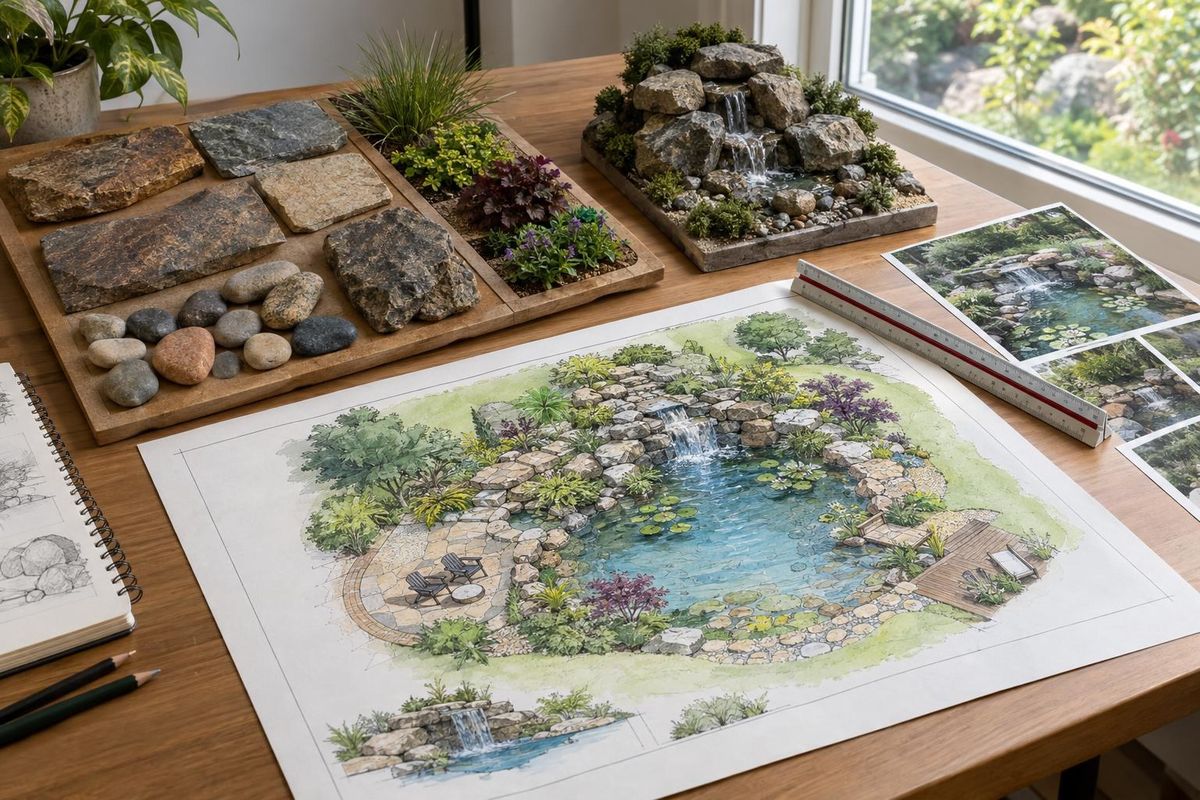
A natural swimming pond pairs a swimming zone with a planted regeneration zone that cleans the water through plants and gravel. It needs more space and careful design. A water garden, by contrast, is a pond planted with lilies and marginal plants for color.
Many yards combine features: a water garden with a waterfall, or a koi pond with a planted edge.
Official sites to explore
Brand names and logos belong to their owners. These links open the official websites in a new tab, and we are not affiliated with them.
- University of Tennessee ExtensionResearch-based guidance on land, water, plants and wildlife in Tennessee.
- Pond BossA long-running resource for pond owners on fish, plants and management.
- U.S. Fish & Wildlife ServiceInformation on wildlife, habitat and native species.
- National Wildlife FederationGuides to creating wildlife habitat in the yard, including water features.
- Pool SafelyFederal guidance on water safety for families, including barriers and supervision.
Quick answers
Which pond type is easiest to maintain?
A pondless waterfall is the easiest because it has no open water to clean. Among ponds, a well-balanced ecosystem pond is often low fuss.
Can I keep koi in an ecosystem pond?
A few, if the pond is large and well filtered. Heavy koi loads need koi-style filtration.
Are swimming ponds safe?
They need the same attention to depth, entries and supervision as any swimming water.