Key takeaways
- Clear water comes from circulation, filtration, plants and the right fish load.
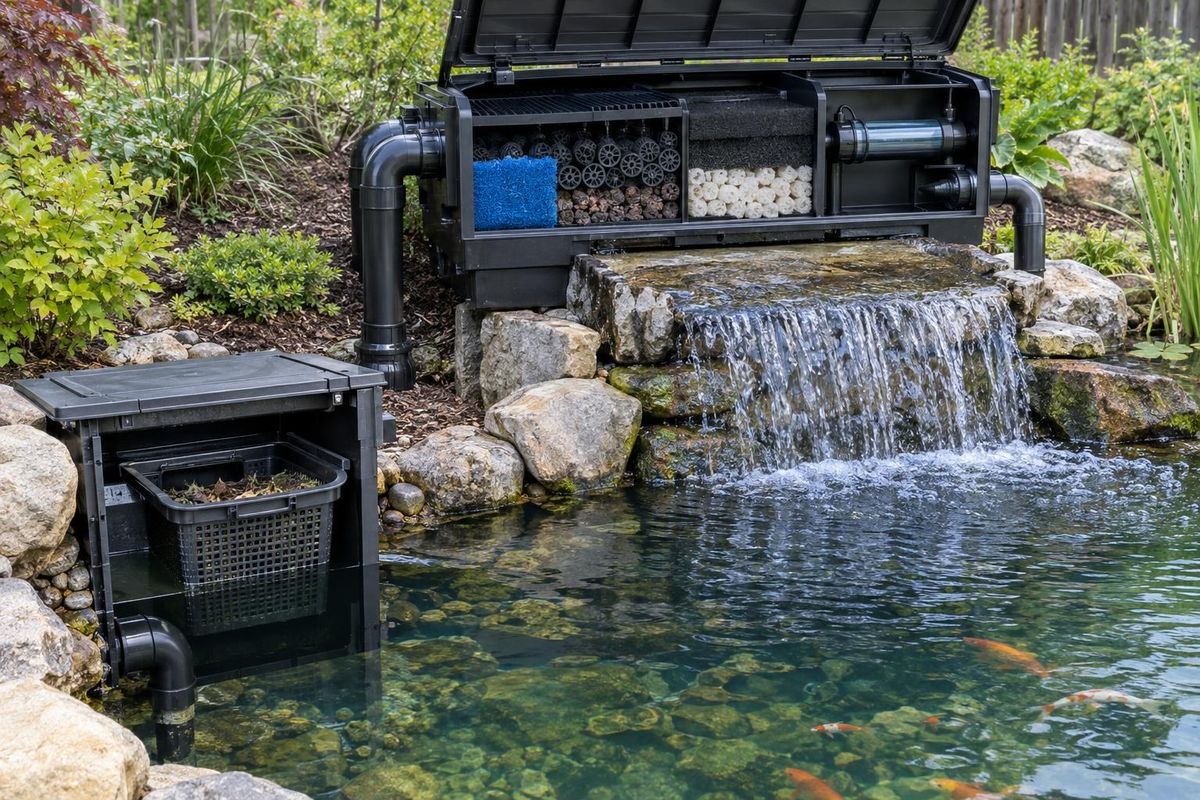
- A skimmer removes leaves before they rot, and a biological filter grows helpful bacteria.
- A UV clarifier treats green water but does not fix string algae.
- Finding the cause beats pouring in chemicals.
What makes water cloudy or green
Algae are plants, and they bloom when nutrients and sunlight are abundant. Fish waste, uneaten food, leaves and debris all add nutrients. Free-floating algae turn the water green, and string algae cling to rocks and waterfalls.
A pond that looks perfect in spring can turn green in summer as temperatures and fish feeding increase.
The parts of a filtration system
A skimmer pulls floating debris into a basket before it sinks and rots. A mechanical filter traps particles. A biological filter, such as a biofalls box, provides surface area where helpful bacteria turn toxic ammonia and nitrite into less harmful nitrate. A UV clarifier uses light to clump and kill free-floating algae.
Each plays a role, and each needs to be sized for the pond's volume and fish load.
Plants, shade and balance
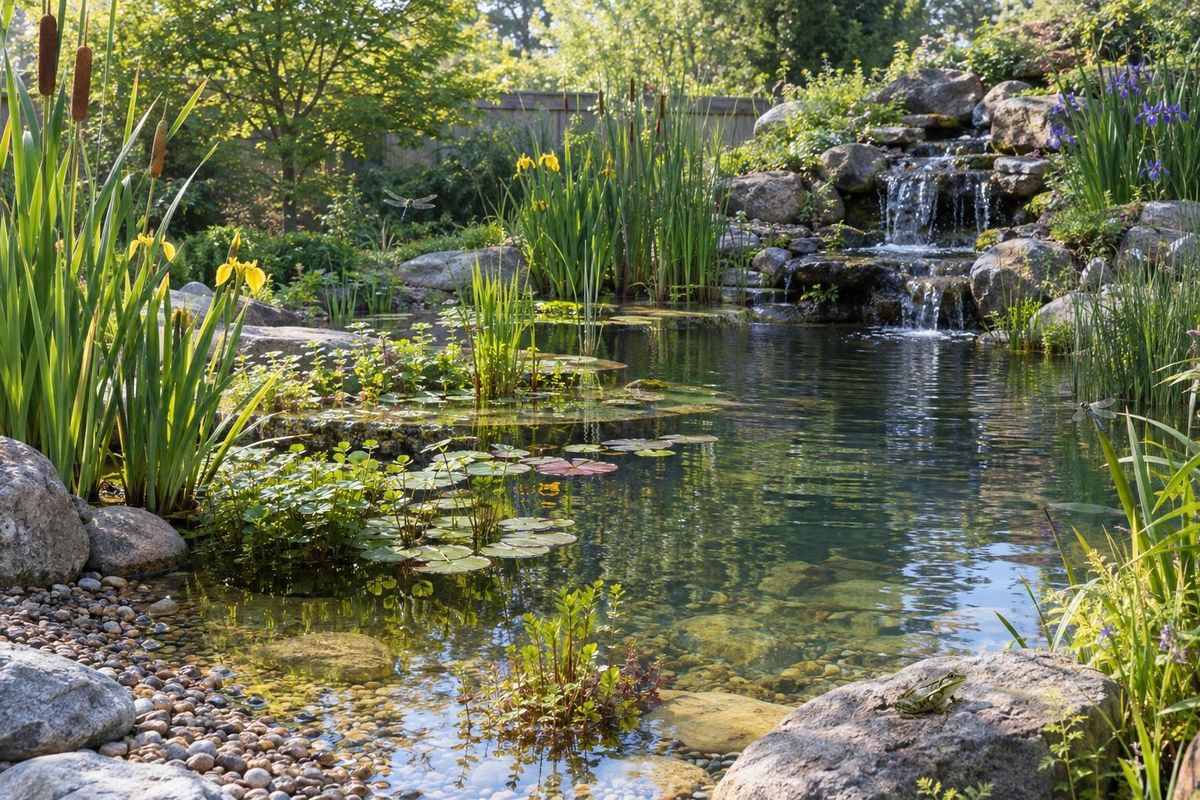
Aquatic plants compete with algae for nutrients, and floating leaves shade the water. A planted shelf or bog filter can make a large difference. Gravel also supports bacteria and gives plants a place to root.
Feeding less, removing debris and not overstocking fish all help.
Fixing a green pond
Start with a diagnosis: test the water, check the filter and flow and look for heavy debris. Often the answer is a cleanout, more filtration, a UV clarifier and better plants, not another bottle of treatment.
Clearing usually takes days or weeks, and a regular maintenance routine keeps it from coming back.
Official sites to explore
Brand names and logos belong to their owners. These links open the official websites in a new tab, and we are not affiliated with them.
- University of Tennessee ExtensionResearch-based guidance on land, water, plants and wildlife in Tennessee.
- Pond BossA long-running resource for pond owners on fish, plants and management.
- U.S. EPA: Nonpoint Source PollutionHow runoff affects water quality and how to reduce it.
- ENERGY STARGuidance on efficient equipment, including pumps and lighting.
- American Fisheries SocietyProfessional society for fisheries science and aquatic ecosystems.
Quick answers
Is barley straw helpful?
It can help slow algae in some ponds, but it is not a cure on its own.
Should I use algaecide?
It can kill algae quickly, but it does not remove the nutrients and may stress fish. We prefer fixing the cause.
How often should I clean the filter?
It depends on the type and load. We show you a routine that protects the helpful bacteria.