Key takeaways
- Koi need depth, room and strong circulation more than decoration.
- Feed less in cool water and stop when the water gets cold.
- Herons and raccoons are real threats that deserve a plan.
- Water testing catches problems before fish show them.
Depth and space
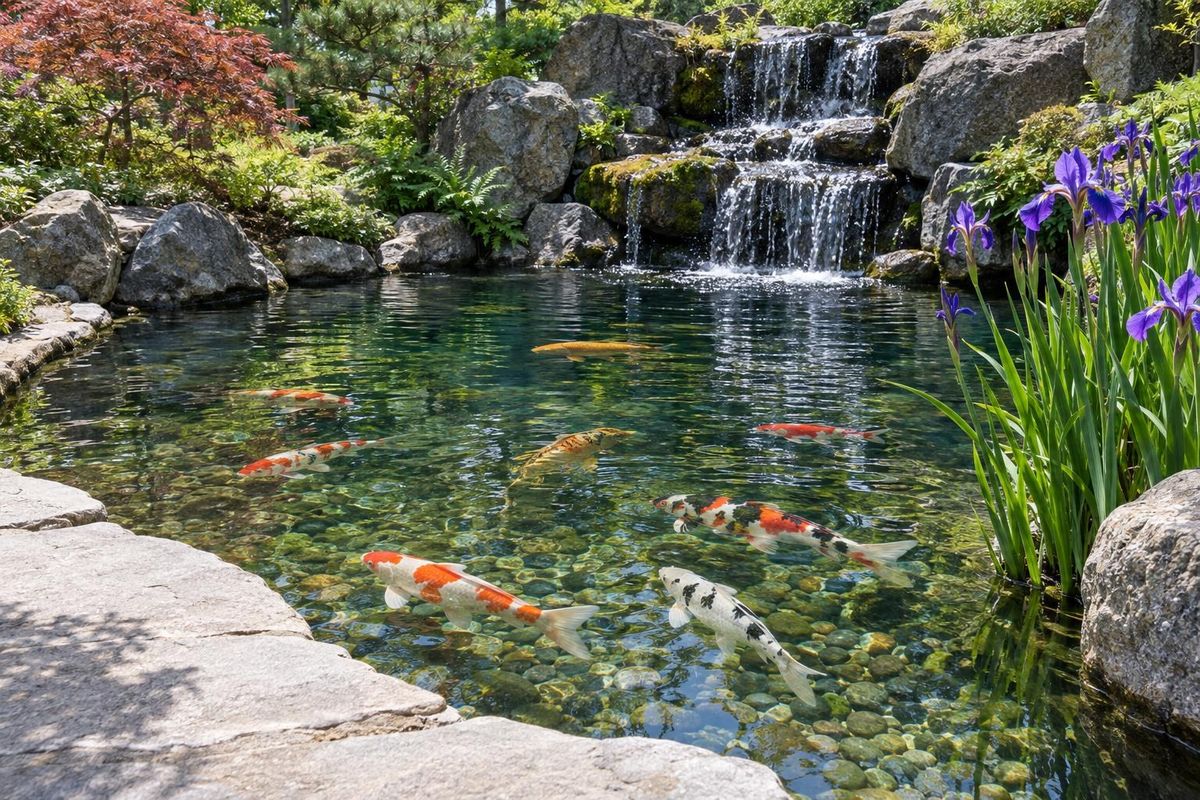
Koi can grow very large and live for decades. A pond built for them is deeper than a typical garden pond so fish have cool water in summer and stable water in winter. Steep sides discourage wading predators, and a flat viewing ledge gives you a place to sit.
Plan for adult size, not for the little fish you buy.
Feeding through the seasons
Koi feed actively in warm water and slow down as it cools. Feed what they eat in a few minutes, and feed less or not at all when the water is cold. Overfeeding is one of the most common causes of cloudy water.
Use a quality food suited to the season and watch the fish. Their behavior is a good guide.
Predators
Great blue herons, raccoons, cats and kingfishers all take fish. Deep sections, steep edges, overhangs, netting, motion-activated sprinklers and decoys help. Layered protection works better than any single device.
Hiding places such as plant shelves and pipes give fish somewhere to go.
Fish health
Test the water regularly for ammonia, nitrite, nitrate and pH, and watch for fish that hang near the surface, rub on rocks, clamp their fins or stop eating. Quarantine new fish before adding them to the pond.
A veterinarian experienced with fish can help with serious problems.
Official sites to explore
Brand names and logos belong to their owners. These links open the official websites in a new tab, and we are not affiliated with them.
- American Fisheries SocietyProfessional society for fisheries science and aquatic ecosystems.
- University of Tennessee ExtensionResearch-based guidance on land, water, plants and wildlife in Tennessee.
- Pond BossA long-running resource for pond owners on fish, plants and management.
- U.S. Fish & Wildlife ServiceInformation on wildlife, habitat and native species.
- National Weather Service NashvilleLocal forecasts, warnings and climate information for Middle Tennessee.
Quick answers
How many koi can I keep?
It depends on pond volume and filtration. Koi grow large, so plan for fewer fish than you think.
Can koi survive winter outdoors?
In a pond of sufficient depth with a gas exchange hole in the ice, many do well.
How do I know if my fish are sick?
Look for changes in behavior, appetite, color and swimming. Test the water first, because poor water is a common cause.